
Borrowed Ideas
Closed loops mean closed eyes.
Ok, so here I go. Trying to make some thoughts make sense.
There’s a quote I’ve been sitting with. from author Michael Bassey Johnson. I don’t know him. But I was looking for a way to articulate my thoughts.
“Treat borrowed ideas as borrowed ideas; for making them your own makes you a thief.”
I shared it this week on my IG and someone pushed back thoughtfully: as a creative, how do you actually draw the line? How do you take inspiration from existing work without crossing into something more problematic? That balance seems tough.
It is. But I think what’s making it tougher right now isn’t the old question of copying. It’s something newer, and worth looking into.

The conversation around copying in creative culture has always had two schools of thought. One says go for it, nothing is truly owned, everything is remix, culture moves by collective borrowing. T.S. Eliot (who I do know) put it plainly in The Sacred Wood (1920):
“Immature poets imitate; mature poets steal; bad poets deface what they take, and good poets make it into something better, or at least something different.”
Jim Jarmusch said much the same in MovieMaker Magazine(2004):
“Authenticity is invaluable; originality is non-existent.”
I guess he was saying more than simply go ahead and steal, his point was about where you look, and whether what you take speaks directly to your soul. The theft only works if it’s honest. (Can it ever be honest?)
The other side believes in fiercely protecting the idea, that what you build belongs to you, that the act of creation carries its own integrity and deserves respect.
I’ve always sat somewhere between them, well more on the protecting your ideas at all cost and letting others have ownership of theirs. But lately I’ve been thinking that both arguments were formed in a world that no longer quite exists.
What’s changed is how we see.
We are all, to varying degrees, looking at the same digital feeds. The same algorithm serving the same references to the same small world of people. And what that produces isn’t conscious copying, it’s something stranger and harder to name. A closed-loop visual culture where the primary source of inspiration is other recent work, often from within the same immediate circle. Where a mood board is built not from books or films or lived experience but from hitting that ‘save’ button on IG or quick screenshot of things made last month by people you know.
This isn’t laziness in the traditional sense, but more so a lack of effort or craft. The work itself might be technically accomplished, and it might tick the boxes for the brand you have been paid by. The laziness is upstream of the work. It’s a failure to look further, to think wider, to ask the simple question: what else is out there? What haven’t I seen yet? Has someone close to me just done something like this?
The result is a kind of creative* ecosystem that feeds on itself. Ideas that were once allowed to breathe, to exist, find their audience, influence slowly, are now absorbed and reproduced almost immediately. Not out of malice. But without much awareness either.
*I wouldn’t really call it creative btw.
There’s also something being lost around attribution, the practice of acknowledging where things came from.
It costs nothing to say: this was inspired by, this grew from, respect to this person for building something like this. That gesture isn’t weakness. It doesn’t diminish the work. It actually keeps the lineage of ideas visible. It shows you know where you are in the chain of things. It treats creativity as the long conversation it actually is, rather than a series of isolated original acts.
When that practice disappears, something subtle shifts. Not just for the person whose work goes unacknowledged, but for the culture itself. The references collapse. The conversation loses its thread.
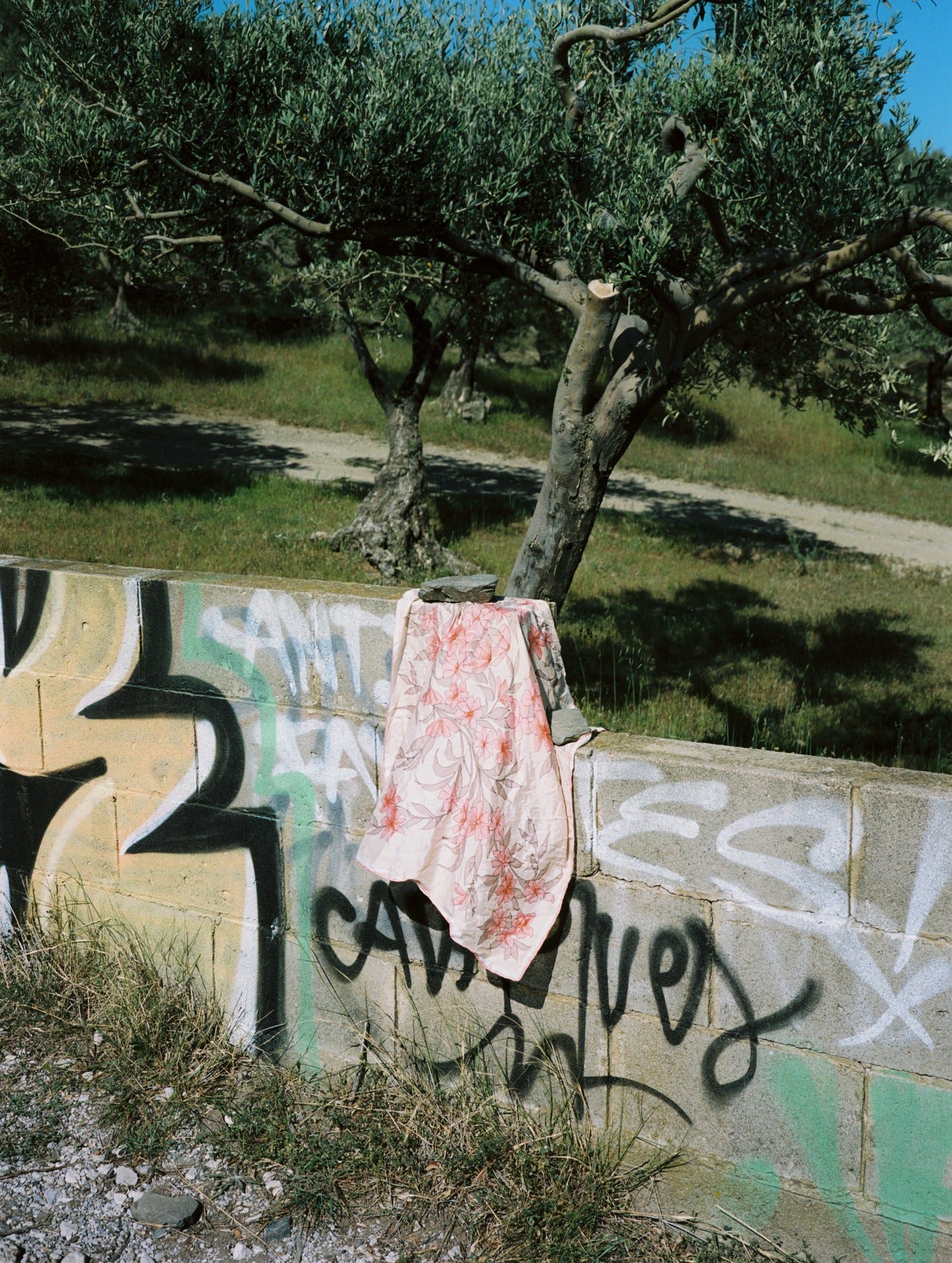
In my earlier years, trying to find my way, I’d sometimes attempt to shoot in another photographer’s style, just to understand what I liked or didn’t like about it, to feel the difference between their instincts and mine. I’d treat it as a private experiment, keep it to myself, never show it. It wasn’t worth showing. It wasn’t mine. But it taught me something about my own work and where to take it.
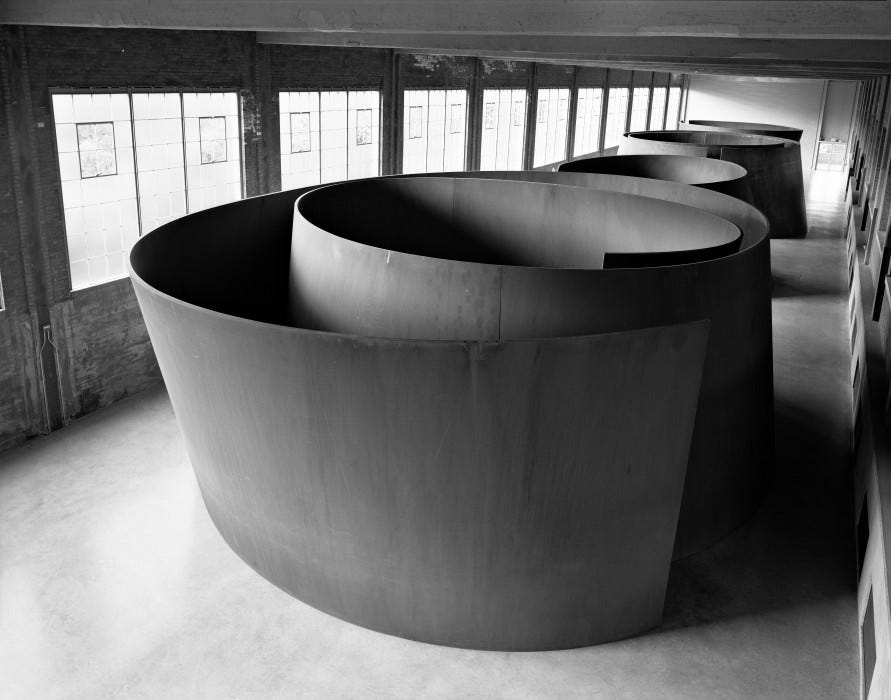
Richard Serra, as another example, was one of all time favourite artists. His work in sculpture truly captures me in ways I cannot explain. His work would be instantly recognised if it was copied. And in no world I am ever going to attempt to become a sculptor and build something like he did. However, there are snippets of his thinking, his process, and ways of being and seeing that have left lasting affects on me that help me towards the ideas that well up in me.
The distinction between influence and copying isn’t always clean, and I don’t think anyone who’s done creative work seriously would claim otherwise. Similar experiences, similar worlds, some overlap is real and inevitable. But I do believe you know the difference when you’re inside it. You know when you’ve gone looking in the world for something, and you know when you’ve pulled directly from someone. That instinct is worth trusting, or at least not hiding away from.
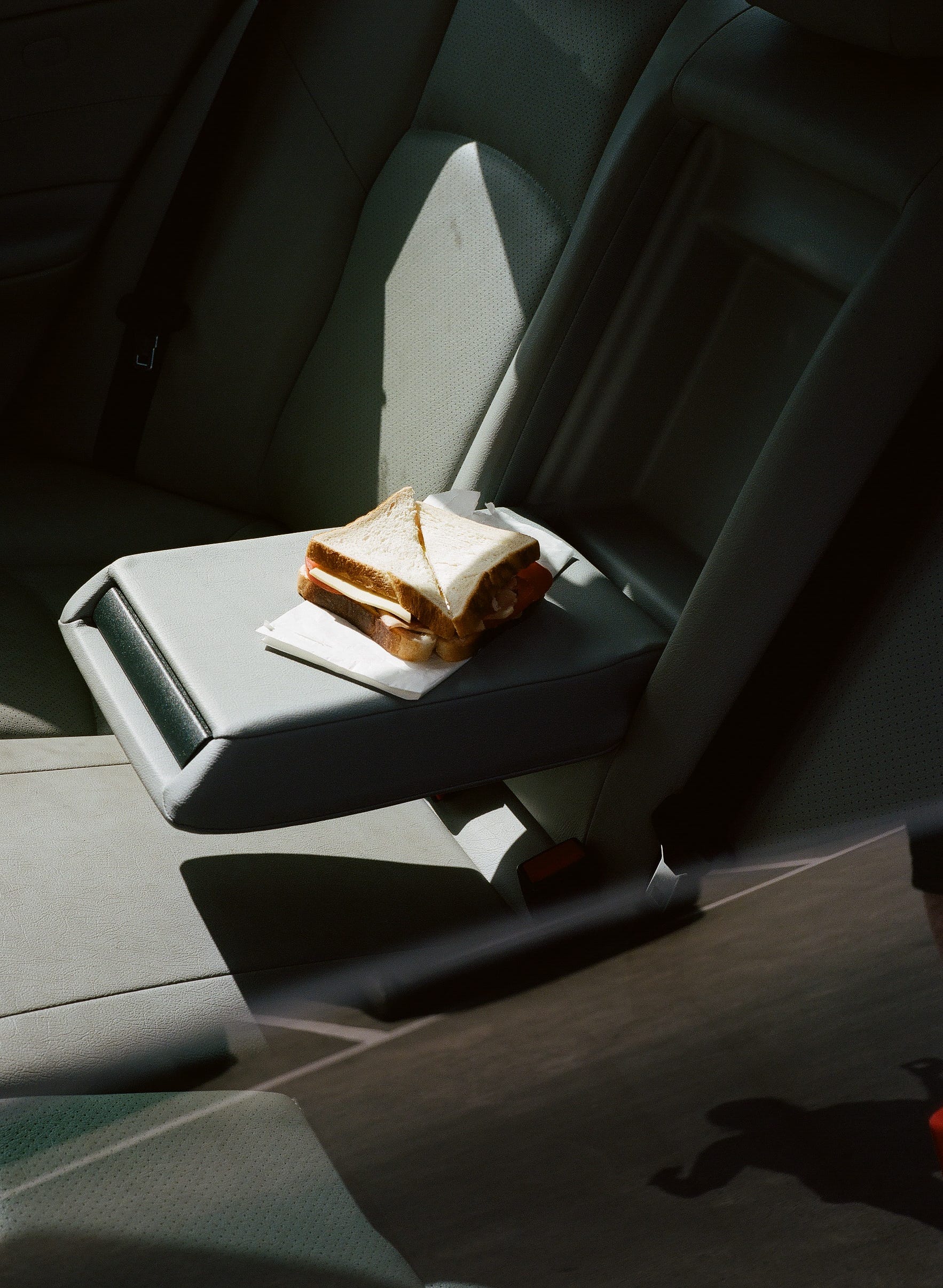
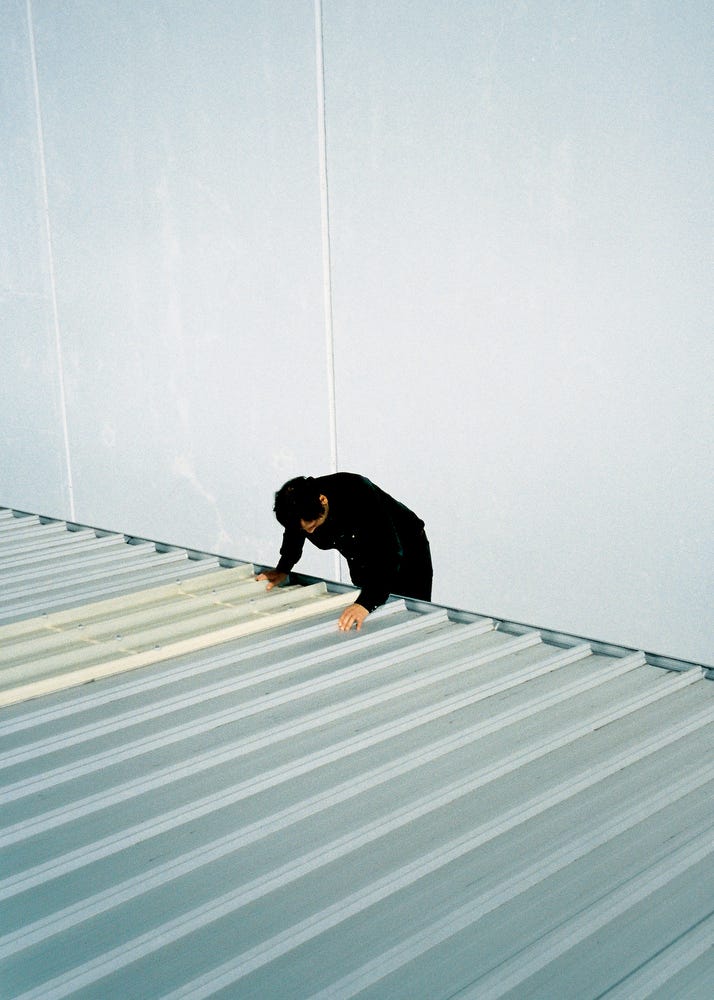
The things that have shaped how I see and work didn’t come from a feed. They come from films and books and galleries and conversations. From spending time with people I admire. From going somewhere I hadn’t been. From looking at things that had nothing to do with the areas I work in and finding something in them anyway. For me it’s been two active decades of focused thinking, making, experimenting and absorbing a particular world.
I was asked once about what makes you a professional photographer. I find those two words sit strangely, but here we are. For me, it means I can get to the better images quicker. Many years ago, it would take me to the end of a shoot to really find a groove. Now I can cut out the fluff and find what I’m looking for faster. It goes the same for other creative work, the people I know, the collaborators, the right medium for the idea. I can get there quicker, because that focus is tuned, and constantly being tuned.
That thinking and experience is slower in the sense that it’s built up over years. It doesn’t show up as a reference image you can drop into a deck. But it accumulates. And it produces work that could only have come from you, because the inputs were genuinely yours.
The question worth sitting with, I think, is not whether copying is right or wrong. It’s whether the way we’re currently feeding our creative practice is actually feeding it at all, or whether we’ve quietly mistaken consumption for inspiration, and the algorithm for the world.
“It’s not where you take things from, it’s where you take them to.”, Jean-Luc Godard.

Thanks for reading.
Until the next time I wake up at 6.30am with enough thinking to write it all down.
For anyone new here. You can see sporadic new work at @benclement_ or @goodsport_magazine